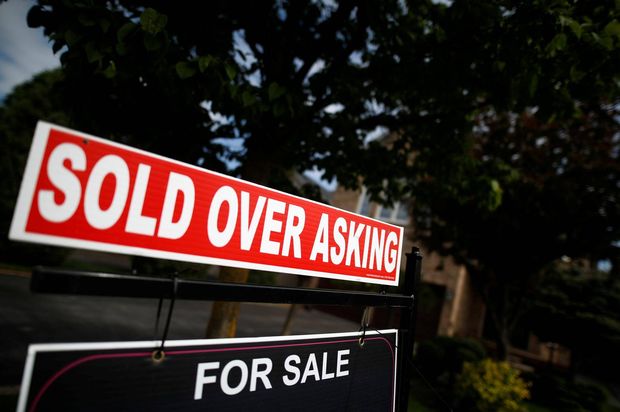
Showing posts with label Foreign home buyers tax. Show all posts

Saturday, 24 February 2018

BC Budget - Housing

Source: https://www.facebook.com/homeiswhereitstarts/

As expected one of the big highlights of the recent BC Budget (yet to be passed in the legislature) is the focus on implementing new policies in order to deal with the housing affordability issues we have seen in BC over the last decade.

The full BC Budget can be found here, the highlights here, and finally the focus on the housing action plan here.

First some praises for the plan.

The plan, although not perfect, aims to deal with both demand and supply side problems currently being faced by the real-estate market. With these policies being aimed to cool demand and stimulate supply (Contrast this to previous policies such as 0% downpayment loans to help first time home buyers. A policy which further stimulated demand).

On the Demand side:

  • Introduction of a speculation tax.
  • Increasing the foreign buyers' tax from 15% to 20% and expanding this tax out of Metro Vancouver to include the Fraser Valley, CRD, and Okanagan.
  • Increasing property taxes (school tax rate) for properties over $3 million. 
  • Actions to prevent speculation and pre-sale condo re-assignments. 
On the Supply Side:
  • Government $6 billion dollar investment in affordable housing
    • 14,000 rental units for 'middle' working families.
    • increasing student residences at universities and colleges.
    • Providing changes to property taxes to encourage rentals. 
What does all this mean? Let's start working on the demand side followed by the supply. 

First the speculation tax, other than the announcement of the idea of a speculation tax, we know very little as to what this would entail, as a result, it is difficult to say what effect this may actually have on the market. Just the same, I am under the belief (normatively) that if effectively placed could have a significant impact on cooling the market. I have written several times on the role of speculation in the housing market, starting with this article here.

Second the Foreign Buyers Tax. I have written about this before as well. to be brief - I am not a fan of this policy. To read my reasons why you can find the previous post here.

Increasing property transfer taxes and school rate taxes for properties over $3 million: There is a part of this policy which seems satisfying. Ratchet up the taxes for those rich enough to afford a $3 million mansion, but keep in mind, many of the people who have found themselves owning multi-million dollar properties are seniors, on fixed incomes who have just always lived in their house and seen property values rise exponentially around them! 

I have witnessed several sad experiences where seniors have come into the bank, they had bought their property decades ago, out in the boonies, only to find that now their property has exploded in value, with the property taxes being so high that they can no longer afford to pay them through any method other than a reverse mortgage, or city lien on their property. 

Finally, actions to prevent speculative pre-sale re-assignments of condos. Again my belief is that this could be an effective policy, as with the speculation tax, however, the big question I have is what does this look like and how will it be enforced. 

To the supply side: 

A $6 billion dollar investment over the next ten years. Let me start by saying that a minority government releasing a spending plan over the next ten years is rather wishful and thus leaves me skeptical. 

I am not sure of the exact details or conditions of this $6 billion, so let's assume this money is available as financing, and funding for public institutions to increase rental housing and student residences. 

First, building 14,000 rental units for the 'middle'. This may be a great idea, but ultimately I feel it will fall into the slow molasses of municipality zoning and bylaw processes which many have argued to be the primary supply problem contributing to the current affordability crunch. Thus I am interested to see how this materializes.

If this does materialize and if this materializes as 14,000 new rental units, not just "14,000 rental units over the next 10 years" then this may have an effect of driving down rents in areas like the CRD and Metro Vancouver where rental affordability remains just as much of an issue as purchasing a home (near 0% vacancy rates in both regions). 

An increase in investment for student housing will also help to relieve the pressure on rental markets (again primarily in university towns such as Nanaimo, CRD, Lower Mainland and the Okanagan) by allowing students their own specific residence it frees up more rental units for the rest of the population, thus allowing an increasing vacancy rate and decreasing price pressure for rents. 

In conclusion, there are still a lot of unknowns with this housing action plan, but preliminary evaluation looks promising to slow (or temporarily) reverse the acceleration of home and rental prices through policies aimed at cooling the demand while stimulating the supply. 

In the coming weeks, I am sure the specifics of these policies will be revealed. Given the nature of politics, come that time I may have to retract the optimistic tone I have. 

What are your thoughts on this policy?  I have taken a rather one-sided approach in my discussion above, but all policies are going to have both winners and losers. Think about who the losers are following the imposition of these policies and what this means for them. 

Feel free to comment below. 

Wednesday, 31 May 2017

The IMF on Canada's Housing Market

Image Source: Curry, Bill. Globe and Mail, "IMF warns of significant risks from Canada's housing market",https://beta.theglobeandmail.com/report-on-business/economy/imf-praises-infrastructure-bank-plan-flags-housing-market-concerns/article35160977/?ref=https://www.theglobeandmail.com&service=mobile
Recently came across this article in the globe and mail, the full article can be found here. It seems that once again the IMF is warning Canada that our housing market is overheated and that this may have serious consequences for future economic performance.

Here the IMF notes how the Canadian banks credit ratings were recently downgraded expressing fears over the number of consumer loans and mortgages on their books and the potential risk that they present given the exceptionally high levels of consumer debt.

I was happy to see this little bit in the report:
Ms. Lim's staff statement also took issue with the foreign buyers tax approach introduced in British Columbia and Ontario that "discriminates against non-resident buyers." The IMF states that non-resident activity is not the sole driver of housing prices and the provinces should replace the foreign-buyers taxes with more effective tax changes aimed at discouraging speculative activity.
Where the emphasis is my own.

What are your thoughts on this? Are we heading for a correction? Or, alternatively, is there too much on the line for the government to allow a housing correction to actually happen? If that is the case, can we have this hypothesized 'soft landing'?

feel free to comment below.

Tuesday, 14 March 2017

Calls for extending the foreign home buyer tax

Image source: http://vancouver.ca/about-vancouver.aspx
If you have been watching the news, there have been recent calls to extend the Vancouver foreign home buyer tax (a 15% tax levied on foreign buyers of real-estate) from Vancouver to Toronto and Victoria as well.

some of these news articles can be found here, here, and here.

What I find amazing about these arguments for a foreign homebuyer tax is the covert racism that underpins it. That somehow, only foreigners are able to afford homes in such quantities that it stimulates demand and pushes up prices!

Specifically, (in my opinion at least) the problem is not foreigners willing to pay obscene amounts for homes - if they plan to reside in said homes. Rather, the problem becomes when individuals (whether domestic or foreign) are willing to pay obscene amounts for these homes because they view these as an investment rather than a form of shelter.

Let's compare and contrast two similar and current situations.

First, Imagine if you will, an individual from China decides to move to Vancouver and purchased a  $1 million dollar condo to live in, paying a $150,000 tax because they are not a Canadian citizen or permanent resident. However, this individual has planned to live in this home - maybe attending school, working, or starting their own business, all in Canada and contributing to local economy.

Meanwhile to contrast.

Second, a Canadian investor from elsewhere in Canada buys a condo in Vancouver for $1 million. Because this investor is domestic, he (she) pays no foreign homebuyer tax. At the same time, this investor is not residing in the condo, nor are they renting it out, as they are betting on the market appreciating and earning capital gains through this price appreciation.

What is the difference between these two cases?

In both cases, there was a new purchase of real-estate, adding to the demand for real estate in Vancouver.

the difference rests in what is done with that purchased real-estate.

In the first case, the foreign national has purchased the condo to live in, using it as shelter, thus jointly adding to the local economy, spending their money and spurring economic activity. (even if they are also hoping to sell in a few years for capital gains!).

In the second case, the domestic investor has purchased the condo to sit empty. thus adding to the demand for real-estate, but other than the initial contribution to the FIRE (Finance, Insurance, Real Estate) industry, there is no prolonged contribution to the local economy.

The question then - which scenario is more damaging?

Well, if real estate is viewed as just another good, then neither case is overly damaging, as in both cases both the buyer and seller are obtaining value from their transaction - which is why they transact!

However, if real estate is understood to be the primary form of shelter (a basic human need) then the second case clearly carries more social costs (increased demand pushing up the price while excluding others the use of the shelter.).

While the first case also adds to the demand, pushing up the price and excluding others the use of the shelter - we are also experiencing a continued contribution to our economy, through an addition to the labour force, additional consumer spending, and possibly investment, all of which helps spur the economy which may not happen in the pure real estate investment situation.

To wrap up, my personal feeling, and opinion. Is that there is a problem with the current real estate market, but that foreign buyers are not in themselves the problem, but rather an easy target. The problem lies in the use of real estate as an investment - something to be bought to earn a return rather than something to be used as a shelter. In this case, it is not that foreigners are the problem, but real estate investors in general, whether they be domestic or foreign.

Thus a foreign homebuyer tax is discriminatory, and perhaps even violates trade agreements which require laws to be enacted fairly over both domestic and foreign individuals and companies. Specifically, what should be evaluated is a changing tax structure to penalize real estate speculation in general, regardless of ethnicity - however, this is clearly easier said than done!

What are your thoughts on this? feel free to comment below.

EDIT: I want to clarify, real-estate investment in terms of a rental property is not really an issue in my mind and in fact should probably be encouraged. The issue becomes real estate investment in vacant properties for capital gains and given the recent census and many investigative news pieces, this appears to be a growing problem.

The Langford Budget: There are No Solutions, Only Trade-offs

  Image Generated with Google Gemini I don’t often shift to this perspective on this blog, but today I am putting on my hat as a Langford Ci...