Showing posts with label Vancouver. Show all posts

Saturday, 24 February 2018

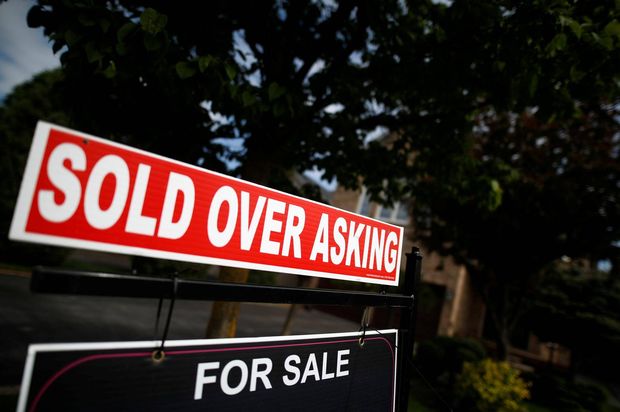
BC Budget - Housing

Source: https://www.facebook.com/homeiswhereitstarts/

As expected one of the big highlights of the recent BC Budget (yet to be passed in the legislature) is the focus on implementing new policies in order to deal with the housing affordability issues we have seen in BC over the last decade.

The full BC Budget can be found here, the highlights here, and finally the focus on the housing action plan here.

First some praises for the plan.

The plan, although not perfect, aims to deal with both demand and supply side problems currently being faced by the real-estate market. With these policies being aimed to cool demand and stimulate supply (Contrast this to previous policies such as 0% downpayment loans to help first time home buyers. A policy which further stimulated demand).

On the Demand side:

  • Introduction of a speculation tax.
  • Increasing the foreign buyers' tax from 15% to 20% and expanding this tax out of Metro Vancouver to include the Fraser Valley, CRD, and Okanagan.
  • Increasing property taxes (school tax rate) for properties over $3 million. 
  • Actions to prevent speculation and pre-sale condo re-assignments. 
On the Supply Side:
  • Government $6 billion dollar investment in affordable housing
    • 14,000 rental units for 'middle' working families.
    • increasing student residences at universities and colleges.
    • Providing changes to property taxes to encourage rentals. 
What does all this mean? Let's start working on the demand side followed by the supply. 

First the speculation tax, other than the announcement of the idea of a speculation tax, we know very little as to what this would entail, as a result, it is difficult to say what effect this may actually have on the market. Just the same, I am under the belief (normatively) that if effectively placed could have a significant impact on cooling the market. I have written several times on the role of speculation in the housing market, starting with this article here.

Second the Foreign Buyers Tax. I have written about this before as well. to be brief - I am not a fan of this policy. To read my reasons why you can find the previous post here.

Increasing property transfer taxes and school rate taxes for properties over $3 million: There is a part of this policy which seems satisfying. Ratchet up the taxes for those rich enough to afford a $3 million mansion, but keep in mind, many of the people who have found themselves owning multi-million dollar properties are seniors, on fixed incomes who have just always lived in their house and seen property values rise exponentially around them! 

I have witnessed several sad experiences where seniors have come into the bank, they had bought their property decades ago, out in the boonies, only to find that now their property has exploded in value, with the property taxes being so high that they can no longer afford to pay them through any method other than a reverse mortgage, or city lien on their property. 

Finally, actions to prevent speculative pre-sale re-assignments of condos. Again my belief is that this could be an effective policy, as with the speculation tax, however, the big question I have is what does this look like and how will it be enforced. 

To the supply side: 

A $6 billion dollar investment over the next ten years. Let me start by saying that a minority government releasing a spending plan over the next ten years is rather wishful and thus leaves me skeptical. 

I am not sure of the exact details or conditions of this $6 billion, so let's assume this money is available as financing, and funding for public institutions to increase rental housing and student residences. 

First, building 14,000 rental units for the 'middle'. This may be a great idea, but ultimately I feel it will fall into the slow molasses of municipality zoning and bylaw processes which many have argued to be the primary supply problem contributing to the current affordability crunch. Thus I am interested to see how this materializes.

If this does materialize and if this materializes as 14,000 new rental units, not just "14,000 rental units over the next 10 years" then this may have an effect of driving down rents in areas like the CRD and Metro Vancouver where rental affordability remains just as much of an issue as purchasing a home (near 0% vacancy rates in both regions). 

An increase in investment for student housing will also help to relieve the pressure on rental markets (again primarily in university towns such as Nanaimo, CRD, Lower Mainland and the Okanagan) by allowing students their own specific residence it frees up more rental units for the rest of the population, thus allowing an increasing vacancy rate and decreasing price pressure for rents. 

In conclusion, there are still a lot of unknowns with this housing action plan, but preliminary evaluation looks promising to slow (or temporarily) reverse the acceleration of home and rental prices through policies aimed at cooling the demand while stimulating the supply. 

In the coming weeks, I am sure the specifics of these policies will be revealed. Given the nature of politics, come that time I may have to retract the optimistic tone I have. 

What are your thoughts on this policy?  I have taken a rather one-sided approach in my discussion above, but all policies are going to have both winners and losers. Think about who the losers are following the imposition of these policies and what this means for them. 

Feel free to comment below. 

Wednesday, 31 May 2017

The IMF on Canada's Housing Market

Image Source: Curry, Bill. Globe and Mail, "IMF warns of significant risks from Canada's housing market",https://beta.theglobeandmail.com/report-on-business/economy/imf-praises-infrastructure-bank-plan-flags-housing-market-concerns/article35160977/?ref=https://www.theglobeandmail.com&service=mobile
Recently came across this article in the globe and mail, the full article can be found here. It seems that once again the IMF is warning Canada that our housing market is overheated and that this may have serious consequences for future economic performance.

Here the IMF notes how the Canadian banks credit ratings were recently downgraded expressing fears over the number of consumer loans and mortgages on their books and the potential risk that they present given the exceptionally high levels of consumer debt.

I was happy to see this little bit in the report:
Ms. Lim's staff statement also took issue with the foreign buyers tax approach introduced in British Columbia and Ontario that "discriminates against non-resident buyers." The IMF states that non-resident activity is not the sole driver of housing prices and the provinces should replace the foreign-buyers taxes with more effective tax changes aimed at discouraging speculative activity.
Where the emphasis is my own.

What are your thoughts on this? Are we heading for a correction? Or, alternatively, is there too much on the line for the government to allow a housing correction to actually happen? If that is the case, can we have this hypothesized 'soft landing'?

feel free to comment below.

Wednesday, 29 March 2017

Comparison of BCAS and Vancouver Fire call types.

Image Source: http://www.gettyimages.ca/detail/illustration/icon-set-emergency-services-royalty-free-illustration/165723541
In my previous post, which can be found here. I evaluated the cost structure differences between Vancouver Fire and BC Ambulance (division of BCEHS) operations in Vancouver.

Here I am following up with a comparison of the breakdown of the types of calls Ambulance and Fire responds to. In my previous post, I mentioned that Vancouver Fire responds to nearly 50% of all Ambulances' calls and commented that given the much higher cost per call for Vancouver Fire that this may be a miss appropriation of public funds, as BCAS may be able to provide the same service for cheaper if they beefed up their resources.

Of course, the issue becomes. What if, the majority of calls which Vancouver Fire responds to are types of calls in which their special skills and training come into play adding a benefit over an additional ambulance crew. For example, if most of these calls are HAZMAT, Rescue, MVA (Motor vehicle Accident), or Fire (Burns). Then perhaps this high rate of call out is justified!

As promised, here is the breakdown of the calls received by BCAS in 2014 in Vancouver and corresponding Fire response based off of call category.

In the above bar chart (organized by highest to lowest frequencies of BCAS calls) we witness that the top five calls which BCAS responds to are for

  1.  Sick (12,393 calls)
  2. Unconcious (6107 calls)
  3. Psychiatric (4890 calls)
  4. Breathing Problems (3975 calls)
  5. Chest pain. (3672 calls)
At the same time the top give calls which Vancouver Fire responds to most are: 
  1. Sick (4157 calls)
  2. Unconcious (4015 calls)
  3. Breathing problems (3975 calls)
  4. Chest pain (3508 calls)
  5. Falls (2233 calls)
The part that I find most interesting about this, is that (as far as I know as an observer!) there is no added benefit of special skills from Fire in the response of these calls over having an additional paramedic crew respond.

Next, let's look at how many of BC Ambulances calls Vancouver responds to as a percent by call category. 
Right off the start - Fire responds to 100% of BC Ambulances HAZMAT calls. Just as I would have expected, the use of their specialized skill set to assist and aid in this situation. 

Next down, Fire also responds to 100% of breathing problems, 99% of Cardiac arrests, and 96% of chest pain. For these calls, I am struggling to understand what extra benefit Fire would provide over an extra ambulance crew (Any insight would be appreciated! as hopefully there is a rational)

What I find interesting is the other side where Fire only responds to 6% of the MVA's which Ambulance responds to (I am assuming that Ambulance only responds to the MVA's which are serious enough to justify). This I find interesting because if the accident is serious enough for Ambulance, might there be a need for Fire in this case as well?

This last graph is Ambulance and Fire response by call severity. from Alpha to Omega, which I understand is most serious to least serious. 

My (updated) understanding is that these call severities, in order from most severe to least, go Echo, Delta, Charlie Bravo, Alpha, Omega. Given this call ordering, our fire response perfectly lines up with the frequency of Fire response, with Fire responding to nearly all Echo and Delta calls and showing up with decreasing frequency as we move down the call severity. 

What are your thoughts on all of this? Feel free to comment below.

EDIT: A previous version had the order of call severities reversed, Thank you for bringing this to my attention in order to correct.

Sunday, 26 March 2017

Costs of Emergency Response: Comparing Ambulance in Vancouver with the Vancouver Fire Department.

Image Source: http://www.bcehs.ca/PublishingImages/BCAS_VAN_033012_113.jpg
A while ago I stumbled across this dataset which outlined the call volumes and types of calls which BCAS (BC Ambulance Service) responded to in the lower-mainland. Although I have plans to use this dataset for some future analysis. At an initial glance, what popped out at me was that the fire department responds on average to about 5% of BC Ambulances calls in the entire lower mainland but, close to 50% of calls in Vancouver itself. (in 2014)

This piqued my interest and got me wondering. What is the cost structure of the fire department? what is the cost structure of BCAS?

From a cost perspective, I have always wondered how cost effective it is to send 6 firefighters and the large fire truck to that many calls - both from a wage and capital cost perspective. Keep in mind, both BCAS and the Fire Department are paid for with public funds, just at different levels of government, provincial and municipal respectively.

Now, luckily the Vancouver fire department provides an extremely detailed breakdown of their previous years' activities in each municipal budget, these can be found here.  Unfortunately, BCAS provides a much less detailed public budget, as a result, I have had to do my best, scrounging together information from the above dataset, the BCAS 2014 annual report, which can be found here, and the BCAS 2014 Vancouver demand analysis which can be found here.

Compiling all this information I obtain the following table, which has also been augmented with wage data from workbc.ca


The big disclaimer here is that the BCAS expense data for Vancouver and the Lower mainland is entirely estimated at 25% and 50% based off of call volumes in relation to the provincial level. As such these are entirely arbitrary and may have no bearing on reality, but at least provide an insight into these areas.

While the expenses are estimated, the call volumes and labour information is accurate and obtained from the above-noted BCAS reports.

The second disclaimer is that Vancouver Fire provides their staffing information in terms of FTE, while BCAS provides it in terms of regular full-time, irregular full-time and part-time.

Through hear-say I understand that many of these "part-time" paramedics in Vancouver can, and often do, work more than a full-time schedule. But, at the risk of underestimating, I assign each part-time employee only 0.5 FTE while each full-time 1 FTE in calculating the FTE for BCAS in each region.

Finally, for the per crew information, BCAS generally operates in crews of 2 while I understand Vancouver Fire generally operates in crews of 4. (thank you, Brian, for this update! Also recognizing that Vancouver Fire will operate with as little as 2 for some medical calls. While this changes the number of FTE crew, this does not change the total expenses/call)

Now some discussion of the actual results of the above table.

My first surprise was that only 3% of the Vancouver fire departments calls are actually to deal with fires. Another 25% of their calls are fire inspections, to finish off with 72% of their calls being medical in nature, supporting BC ambulance. That means despite being a fire department (with their budget being about twice the estimated Vancouver BC ambulance budget) they primarily act in a capacity of being first responders to medical calls.

Now in a bit of preliminary research on this topic. I looked into the importance of first-responders, and empirically it appears that having a fast response time, all else equal, greatly increases the viability of the patient. My question then; does society benefit more when the first responder is from the fire department? or given the cost of fire response, would a modified response structure with BCAS be more cost effective and provide the same patient benefit?

Clearly, the Fire Department provides an extremely valuable service, especially in cases of vehicle accidents and hazardous materials. Unfortunately, I have not yet worked out from the above dataset, what percentage of Fire calls are due to hazmat or MVI (Motor Vehicle Incident), or just medical, with the request of a first-responder (Fire) crew. This will definitely, be the area of future follow ups! (followed-up here)

To finish off this post, as it has gotten a little long, If we evaluate the cost per call and the wage cost per call between calls in Vancouver for BCAS and the Fire Department we see that:
  • Vancouver Fire has a wage cost per call almost 8 times larger than BC ambulance.
  • Vancouver Fire has a total cost per call almost 3 times larger than BC ambulance. 
Although this data is already 3 years old and pre-fentanyl crisis, I find it fascinating that most of the news coverage on the crisis comes from the fire department, resulting in calls for more department funding when perhaps a more cost effective solution would be to increase ambulance funding and staffing.

But then again, these observations are just from a quick back of the envelope calculation. Perhaps there is much much more to the story. 

As I said my interest has been piqued and I now have a good chunk of data to pour over. 

Move over real-estate market, I have found a new topic for the next little while.

What are your thoughts? feel free to comment below.

EDIT: In retrospect, this article may seem like I have decided to pick a side in an emergency services battle for supremacy. This is not the case! Rather the above article is purely motivated by my curiosity and surprise based on the results and through this hopefully stir some thought on how these essential services may be provided in a more cost-effective manner!


Thursday, 23 March 2017

#Budget2017

Image Source: https://goo.gl/images/SWCjEH

I was really looking forward to the federal budget, I had big plans to look through it and be able to write a bit of praise, a bit of criticism, and everything between.

Instead ... I am left with not much to write about because there is very little that is actually happening in this budget!

First, the 2017 Canadian Federal Budget can be found in detail here, or summarized fact sheets can be found here.

Thus ... to be nitpicky, a few comments on the budget below:

Apparently, this budget is going to help the middle class (What is the middle class?) - at one point Morneau says:
We’re repairing nearly 50,000 social housing units, to make sure families have a safe and secure place to live.
We’ve lifted 18 long-term boil water advisories in First Nations communities, getting us closer to our ultimate goal of ensuring that every child in Canada has access to clean drinking water.
Ten years from now, our cities, towns, and northern and rural communities will be healthier and better connected.
Our air and water will be cleaner.
This is admirable, the lifting of 18 long-term boil water advisories is commendable! but my issue with this is that - in the first liberal budget, they gave a small amount of money to commission a study on housing affordability, to a degree I was expecting a follow-up to this in this budget, especially since the issue of housing has been dominating local media, especially in Vancouver and Toronto.

"To make sure families have a safe and secure place to live", is that except for families in Vancouver/Toronto? where I am sure we are going to need more than 50,000 repaired social housing units to house a "middle class" which is finding it harder and hard to afford basic shelter.

Okay, given my recent posts on shelter and real-estate, that little rant should have been expected, but there is one area in particular which really struck me, that most in the media seem to be praising.

That is the governments pick of 6 specific industries which it deems worthy to invest in, to further develop our comparative advantage and ability to produce and trade in these fields. While in theory, the process of the government picking "winners and losers" amongst industry can generate comparative advantage and assist an economy - but what happens if we get it wrong? In this case, the government is considering the following 6 industries:

  1. Digital
  2. Clean Technology
  3. Agri-food
  4. Advanced manufacturing
  5. Bio-sciences
  6. Clean Resources.
I mean ... if the politicians actually get things right, this could be good! And really, politicians with all their resources and information must be pretty good at picking winners and losers - just look at the Canadian Aerospace industry and bombardier.

Overall, this is a midterm budget and in the back of my mind, I had low expectations for it. 

At the same time, I kept telling myself that it was a midterm budget and because voters are short-sighted and because to our south we have some interesting politics happening. So perhaps the government will present some serious structural changes (few that they campaigned on, and which Canadians had been asking for) - after all, they have the time to recuperate before the next election if they turned out poorly! 

so maybe it was a well-played wait and see on the part of Morneau, or perhaps it will turn out to be a missed opportunity. 

What are your thoughts on this budget? Much ado about nothing? any parts you liked, didn't like, had hoped to see?


Tuesday, 14 March 2017

Calls for extending the foreign home buyer tax

Image source: http://vancouver.ca/about-vancouver.aspx
If you have been watching the news, there have been recent calls to extend the Vancouver foreign home buyer tax (a 15% tax levied on foreign buyers of real-estate) from Vancouver to Toronto and Victoria as well.

some of these news articles can be found here, here, and here.

What I find amazing about these arguments for a foreign homebuyer tax is the covert racism that underpins it. That somehow, only foreigners are able to afford homes in such quantities that it stimulates demand and pushes up prices!

Specifically, (in my opinion at least) the problem is not foreigners willing to pay obscene amounts for homes - if they plan to reside in said homes. Rather, the problem becomes when individuals (whether domestic or foreign) are willing to pay obscene amounts for these homes because they view these as an investment rather than a form of shelter.

Let's compare and contrast two similar and current situations.

First, Imagine if you will, an individual from China decides to move to Vancouver and purchased a  $1 million dollar condo to live in, paying a $150,000 tax because they are not a Canadian citizen or permanent resident. However, this individual has planned to live in this home - maybe attending school, working, or starting their own business, all in Canada and contributing to local economy.

Meanwhile to contrast.

Second, a Canadian investor from elsewhere in Canada buys a condo in Vancouver for $1 million. Because this investor is domestic, he (she) pays no foreign homebuyer tax. At the same time, this investor is not residing in the condo, nor are they renting it out, as they are betting on the market appreciating and earning capital gains through this price appreciation.

What is the difference between these two cases?

In both cases, there was a new purchase of real-estate, adding to the demand for real estate in Vancouver.

the difference rests in what is done with that purchased real-estate.

In the first case, the foreign national has purchased the condo to live in, using it as shelter, thus jointly adding to the local economy, spending their money and spurring economic activity. (even if they are also hoping to sell in a few years for capital gains!).

In the second case, the domestic investor has purchased the condo to sit empty. thus adding to the demand for real-estate, but other than the initial contribution to the FIRE (Finance, Insurance, Real Estate) industry, there is no prolonged contribution to the local economy.

The question then - which scenario is more damaging?

Well, if real estate is viewed as just another good, then neither case is overly damaging, as in both cases both the buyer and seller are obtaining value from their transaction - which is why they transact!

However, if real estate is understood to be the primary form of shelter (a basic human need) then the second case clearly carries more social costs (increased demand pushing up the price while excluding others the use of the shelter.).

While the first case also adds to the demand, pushing up the price and excluding others the use of the shelter - we are also experiencing a continued contribution to our economy, through an addition to the labour force, additional consumer spending, and possibly investment, all of which helps spur the economy which may not happen in the pure real estate investment situation.

To wrap up, my personal feeling, and opinion. Is that there is a problem with the current real estate market, but that foreign buyers are not in themselves the problem, but rather an easy target. The problem lies in the use of real estate as an investment - something to be bought to earn a return rather than something to be used as a shelter. In this case, it is not that foreigners are the problem, but real estate investors in general, whether they be domestic or foreign.

Thus a foreign homebuyer tax is discriminatory, and perhaps even violates trade agreements which require laws to be enacted fairly over both domestic and foreign individuals and companies. Specifically, what should be evaluated is a changing tax structure to penalize real estate speculation in general, regardless of ethnicity - however, this is clearly easier said than done!

What are your thoughts on this? feel free to comment below.

EDIT: I want to clarify, real-estate investment in terms of a rental property is not really an issue in my mind and in fact should probably be encouraged. The issue becomes real estate investment in vacant properties for capital gains and given the recent census and many investigative news pieces, this appears to be a growing problem.

The Langford Budget: There are No Solutions, Only Trade-offs

  Image Generated with Google Gemini I don’t often shift to this perspective on this blog, but today I am putting on my hat as a Langford Ci...